The Longevity Letter #2: CRISPR Baby Makes History
Medical breakthroughs once thought impossible are now becoming reality. From personalized gene therapy to AI-driven care, this issue explores how “incurable” diseases may only be temporary—and what th
Elevate X Health
Longevity & Precision Health
Hi ,
This week was just bursting with exciting developments in longevity, health, and AI! Meanwhile, I'm excited to share that we have signed up some big names for our launch of the first Elevate X partner programs (coming late summer)! That's all I can say for now, but if you're interested in becoming a leading longevity brand don't hesitate to reach out by hitting reply.
What if "Incurable" is just temporary? The miracle of gene therapy
Baby KJ Muldoon faced a grim future with his ultra-rare CPS1 deficiency—his body unable to process protein without toxic ammonia buildup. The standard path: a risky liver transplant with uncertain outcomes.
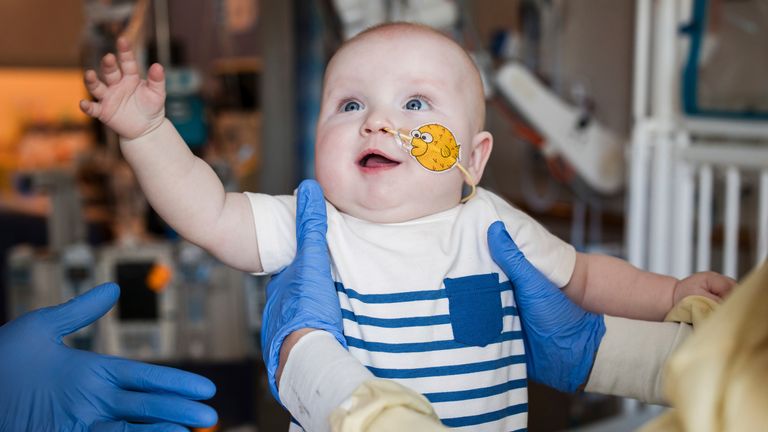
Instead, this February, KJ received medical history's first personalized CRISPR treatment, designed specifically for his unique genetic mutation. Today, he eats normal food, needs half his previous medications, and has jumped from the 7th to 40th weight percentile. Behind these numbers is a child now likely to experience a normal childhood that once seemed impossible.
Published in The New England Journal of Medicine, this breakthrough offers hope for 30 million Americans with rare genetic conditions previously considered untreatable.
If you or someone you know has a rare condition and you want to explore trials, visit clinicaltrials.gov to discover emerging treatments like KJ's.
Dr. Lin's Take: While celebrating this scientific triumph, there remains a big open question–who will pay for these customized treatments? Personalized genetic therapies are incredibly expensive to develop and, unless we figure out a payment solution, will remain available only to those with exceptional resources or lucky enough to join clinical trials.81 lives saved daily: The opioid crisis finally losing ground
After years of grim statistics, a ray of hope: CDC reports a stunning 27% decrease in overdose deaths for 2024—saving 81 lives daily compared to last year. This follows a 3% decline from 2022 to 2023, marking the first sustained improvement since 2018.
This reversal stems from broader naloxone availability, expanded treatment programs, and reduced fentanyl supply. While 83,000 annual deaths remain a national tragedy, this turning point proves that coordinated, evidence-based interventions can overcome what many considered an intractable crisis.
For substance use resources: SAMHSA Helpline 1-800-662-HELP
What if doctors aren't being replaced by AI, but by patients who use AI?
OpenAI's HealthBench delivered a wake-up call to medicine: AI systems outperformed 262 physicians from 60 countries across key clinical capabilities. The AI scored 0.777 overall versus physicians' 0.610 in communication, following instructions, and diagnostic accuracy.
More surprising still—physician-AI collaboration (0.733) showed no meaningful improvement over AI alone, challenging fundamental assumptions about human-machine partnerships in healthcare. But this will come as no surprise to regular readers of our newsletter–we've seen this reality clearly from afar.
While regulations currently prevent AI from making official diagnoses, these results signal an imminent transformation in medical practice that will redefine healthcare delivery.
Your ibuprofen may be stifling your longevity
Named for the Greek goddess who spins life's thread, the Klotho protein shows remarkable power over aging. Researchers found increasing this protein in mice extended lifespan by 15-20% while enhancing muscle strength, bone density, and cognitive function—addressing multiple dimensions of aging simultaneously.
A concerning finding emerged alongside these promising results: common NSAIDs like ibuprofen may decrease natural Klotho levels, potentially accelerating aspects of aging—an unexpected link between everyday pain relievers and longevity. But note: this is an observational study finding, and no causal relationship has been established.
When supplements actually do help: B complex shows promise against glaucoma
A groundbreaking study found that B vitamins (B6, B9, B12) and choline significantly slowed optic nerve damage in glaucoma models, potentially protecting vision through a straightforward nutritional approach.
Published in Cell Reports Medicine, the research showed these nutrients correct metabolic disruptions in retinal cells, addressing a key mechanism of nerve damage. Human trials are now recruiting participants to confirm these findings for the 80 million people worldwide living with glaucoma.
Dr. Lin's Take: These findings highlight medicine's bias toward complexity over simplicity. We've directed billions toward sophisticated glaucoma drugs with incremental benefits while overlooking accessible nutritional approaches. If these same results came from a patentable compound rather than common vitamins, we'd see massive industry investment. But I caution everyone to proceed carefully. My patients will be the first to tell you that I tend to peel off supplements rather than add them on. The incredible number of interactions between supplements, medications, and everything else going on in our bodies means less is often more. But if you're someone at risk of glaucoma or if you have labwork showing you may be deficient in B vitamins (or have the MTHFR gene), you may benefit from methylated B vitamin supplementation.Share our mission to democratize longevity
Share Elevate X$101 million wager: Can a competition push innovators to successfully reverse aging?

Forty elite teams were just announced as semifinalists for the $101 million XPrize Healthspan, developing interventions to rejuvenate muscle strength, cognitive function, and immune capabilities in adults 50-80. The approaches span cutting-edge science—from stem cells to comprehensive lifestyle systems—with an $81 million prize awaiting teams demonstrating 10 years of functional rejuvenation by 2030.
This moonshot addresses a critical challenge: the growing gap between lifespan and healthspan, with many spending decades in declining health despite living longer.
While breakthroughs develop, focus on proven approaches: Mediterranean diet, resistance training, and social connection
That's it for this week! Or rather, that's it before this newsletter gets way too long.
As always, stay healthy and stay curious,
Hillary Lin, MD
Co-Founder & CEO
Elevate X Health
